01
35 years of pattern recognition.
Thousands of patients across decades — the ability to notice what others miss, and to recognize what's actually driving the pattern in your body.

SoftWave Tissue Regeneration · Long Beach
You've likely already been through the standard path — primary care, an orthopedist, physical therapy, perhaps imaging or steroids — and something still isn't fully resolved. What's been missing isn't another treatment. It's an accurate picture of what's actually going on. The examination isn't a feature of the service. It's the foundation of the accuracy.
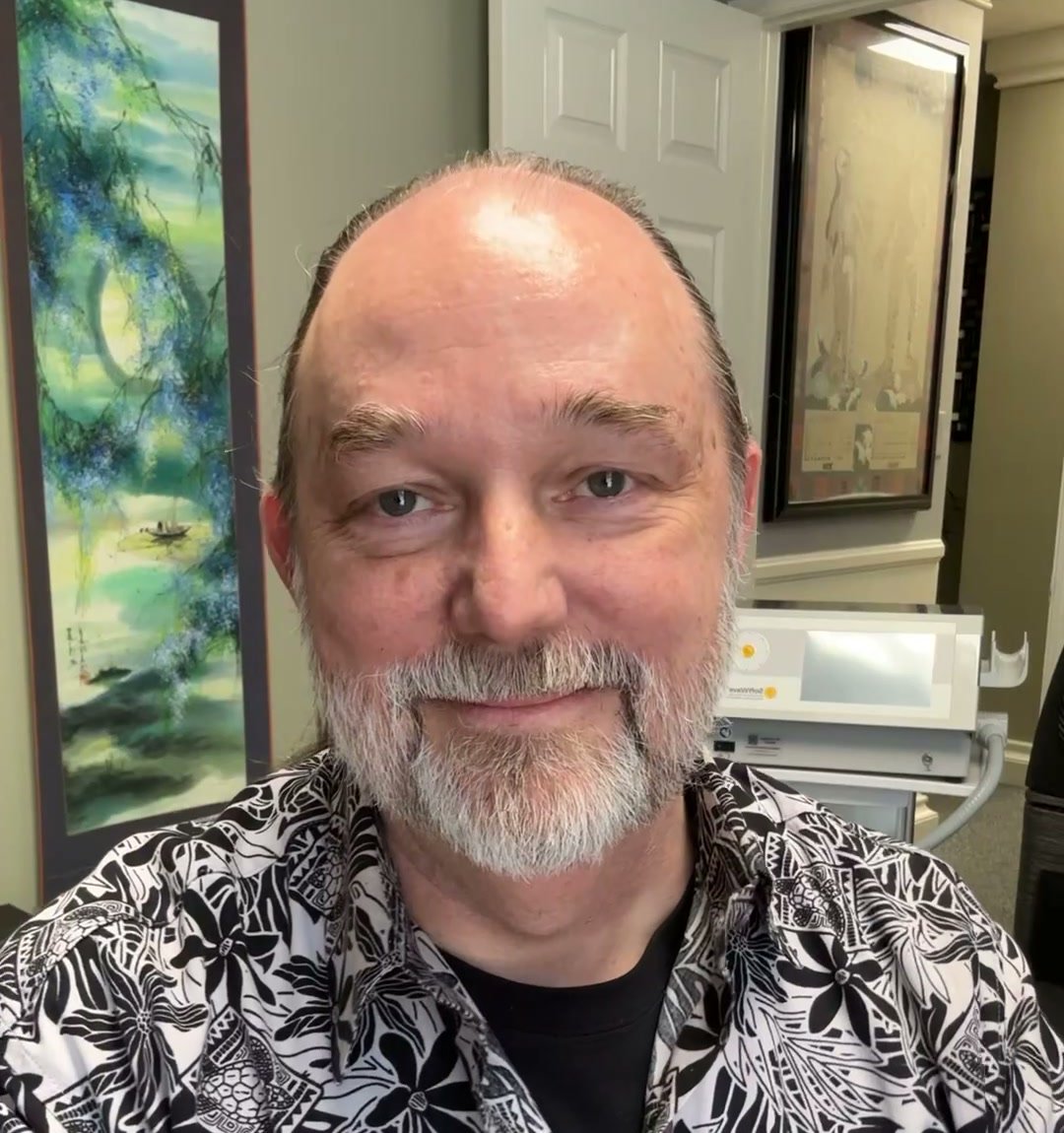
Chronic and overwhelming pain is communicating that the person's body has become disorganized in its ability to regenerate.
— Dr. Arnette
You need a treatment that's specific to you.
How our approach works
Before any treatment begins, Dr. Arnette reviews the patient's history, labs, and any imaging they've brought — X-rays, MRIs, prior workups — and hands-on evaluation. A picture then emerges that is specific to that person and their condition. The therapies Dr. Arnette chooses, including SoftWave, are chosen from what that picture reveals. And each session updates that picture — because the body's response to treatment is itself guiding what happens next.
You're not a knee pain problem. You are a non-healing knee pain problem.
How SoftWave works
Even 35 years of skilled acupuncture, soft tissue work, and chiropractic can't reach the kind of scar tissue that lives between cells.
SoftWave is a German-made device that delivers sound waves traveling faster than the speed of sound — approximately 3,200 mph — directly into the tissue. It does one specific thing other modalities can't — it breaks up intracellular scar tissue: the adhesions that sit below where thumbs and elbows reach.
Once those adhesions clear, the body's own repair signaling restarts. Circulation improves where it had stalled. Resident stem cells in the tendons get activated. Tissue that had been quietly degenerating begins, again, to rebuild.
It isn't replacing acupuncture, soft tissue work, or chiropractic. It's adding to it — at a layer those modalities can't touch.
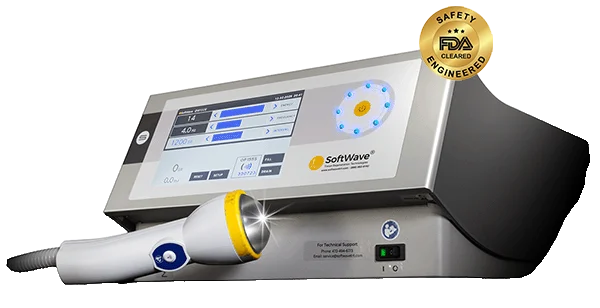
SoftWave · Tissue Regeneration
From Dr. Arnette
Five years ago, Dr. Arnette's left hip was diagnosed with severe osteoarthritis and osteoporosis — double-stacked, one on top of the other. He was hobbling on a cane, in constant pain, working out of a chair. The modalities he'd spent a career mastering addressed what they could reach. What they couldn't reach was the intracellular scar tissue deeper than hands or needles go. That's the layer SoftWave addresses.
Then his physical therapist introduced him to a new device from Germany.
"After my first SoftWave session, I sat up off the table and instantly had gyroscopic motion of my hip — which I hadn't felt in seven or eight years."
He's fifteen sessions in now. Around 80–85% improved on pain, range of motion, and strength. Climbing stairs most of the time. Still in care — but back in his life.
The two-minute cut covers the headline. The longer version goes deeper — five years with the diagnosis, the two and a half years of trying other things first, what the SoftWave course actually looked like, and why Dr. Arnette ultimately added it to the care he offers his own patients.
Worth the time if you're considering this seriously, or if you want to understand how an experienced clinician thinks about adding a new tool to a 35-year practice.
Where SoftWave earns its place
The common thread is tissue that has stopped repairing itself — and a healing process that has become disorganized can be reorganized.
Why this practice
The result is shaped by the clinician, the depth of the diagnosis, and how completely the underlying problem has been understood.
Thousands of patients across decades — the ability to notice what others miss, and to recognize what's actually driving the pattern in your body.
Acupuncture, functional medicine, SoftWave, soft tissue work, chiropractic — one clinician holding all of them at once, moving between them in real time based on what your body reveals.
The examination isn't a feature of the service. It's the foundation of the accuracy — and everything that follows depends on getting that picture right.
Dr. Arnette recovered from his own hip degeneration with SoftWave. He didn't read about it. He lived it.
Honest fit
This practice isn't the right fit for everyone — and we'd rather you know that before you make a decision. That's why we offer a complimentary 15-minute conversation. Phone, Zoom, or in person. No commitment. Just enough time for both of us to understand whether this is the right next step for you.
How we work together
What to expect
Dr. Arnette reviews your history, labs, and any imaging you've brought — X-rays, MRIs, prior workups — along with a hands-on evaluation. A picture then emerges that is specific to you and your condition.
The plan is built around your specific pattern. This may include lab analysis, nutritional and lifestyle considerations, and functional medicine alongside the hands-on work.
Focused sessions based on what you and Dr. Arnette determine together. These may include acupuncture, functional medicine, SoftWave, soft tissue work, and chiropractic.
Over the coming weeks and months the treatments work together, each session informing the next, until the problem is resolved and you're back in your life.
Worth asking
SoftWave uses sound waves traveling faster than the speed of sound — approximately 3,200 miles an hour — to stimulate the body's own regenerative biology, reaching tissue at a depth that hands, needles, and conventional therapy cannot.
Most patients describe it as a firm tapping sensation. It's tolerable for nearly everyone, including people who have been guarding an area for a long time. Treatments are short — often under fifteen minutes per area.
A typical course is between six and twelve sessions over several weeks, depending on the tissue involved and how long it has been compromised. Dr. Arnette gives you a specific picture after the diagnosis, not before.
Chiropractic assesses and treats structural challenges — allowing the force of gravity to move through the bones as they were designed. When joints are misaligned, that disrupts the nervous system's ability to naturally rebalance the musculoskeletal system. Chiropractic therefore indirectly affects soft tissue by aligning the joints for proper signaling to and from the brain.
SoftWave is a sound therapy applied directly to tissue that has become fibrous at the cellular level.
The two are complementary but not interchangeable.
Services at ParkView are offered on a private-pay basis. Insurance does not pay for the methods we use. We accept cash, check, and all major credit cards including American Express.
Plantar fasciitis, knee pain, shoulder tendinopathy, hip and joint degeneration, chronic low back pain, neuropathy, tennis and golfer's elbow, old injuries that never quite resolved, and post-surgical recovery. The common thread is tissue that has stopped repairing itself.
How do I know if I'm a candidate?
You don't need to arrive with the right words. Start with whatever brought you here — and Dr. Arnette will ask the questions that help both of you understand the full scope of what's going on. The 15-minute conversation is how we find out together whether this is the right fit. Phone, Zoom, or in person.
The next step
"Your DNA is programmed for self-healing. My work is restoring the conditions for the body to repair itself."
Received
Check your inbox for a confirmation. If you want to add anything before we talk, just reply to that email — it goes straight to the practice.
Or call directly
(562) 473-5371 We answer the phone.Visit
3320 Los Coyotes Diagonal
Suite 102
Long Beach, CA 90808
Private pay
Services at ParkView are offered on a private-pay basis. We accept cash, check, and all major credit cards including American Express.